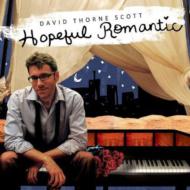
Armed with roses and a piano, singer/songwriter and pianist David Thorne Scott has designs on your heart with his new album Hopeful Romantic. Deep musicianship and creativity born of years of jazz explorations combine with youthful iconoclasm and a rock aesthetic to give music-lovers a delightful surprise. Playfully sweet but wise lyrics and angular melodies are hallmarks, as is the intimate yet strong voice that declaims them. I love my audience. Whenever I have stretched out in my live jazz shows, whether it's a country song or an 80s pop ballad or an experiment with electronics and chanting, they have come right along to listen, says Scott. When I heard the Jamie Cullum record The Pursuit, I had the epiphany that I could bring the same eclecticism to a recording. Hopeful Romantic - the Boston-based singer's first crossover album - consists of smoky jazz, powerful rock anthems, bouncy pop and moody hip-hop musings. These disparate rays are focused through a voice that provides a singular emotional resonance. Regardless of style, I still sound like myself, Scott says. The bookend tracks are The Sign On My Door and Crossing the Line, originals that sound like jazz standards from the golden age, but with sly lyrics born of a 21st century mind: Let the coffee cool down while we're foolin' around, we can go to Starbucks afterwards... The infectious Who Doesn't Want To Fall In Love and the ebullient I Should Take It From Here are flirtations that practically scream to be sung along with. More Than One Way mesmerizes with a mlange of acoustic, electric and electronic sound anchored by aggressive percussion to tell a story of freedom from the chains of obsessive love. Perhaps the most distinctive track is Wisdom From Truth, with it's R&B-infused form and hook, dark harmonies and lyrics, and bebop melody. I was trying to channel Eddie Jefferson by way of Robert Glasper, says Scott with a laugh. Hopeful Romantic is a stylistic departure from Scott's previous recordings, the late-night jazz of Shade and the kinetic interplay of the vocal/piano duet record Dyad. As a pure jazz singer, Cadence Magazine says he phrases like a saxophone player and is as slippery and hip as the young Mel Torm. The Jazz Education Journal chose Shade as a Top 5 Vocal CD of the year. It was the only self-produced album in a lineup of luminaries Andy Bey, Kitty Margolis, Mark Murphy and Judi Silvano. He is a welcome change from the more predictable vocal jazzers in the competitive vocal milieu. Scott's voice is refreshingly different; he explores, discovers, and shares resulting creative approaches to melodies and doesn't fail to swing, said Herb Wong's review. I haven't been this moved by a performance of 'For All We Know' since Carmen McRae. Crystal clear diction, squeaky clean tone and the ability to scat like a true horn player are among the qualities that set this vocalist apart from hundreds of thousands of jazz singers of either sex. ... [Scott is] an indisputable jazz artist that belongs in the spotlight, says Ori Dagan of ejazznews.com. Since the recording of Dyad, Scott has been experimenting with widely varying styles of music. He founded the Hard Bop Sextet featuring Greg Hopkins to explore funky jazz inspired by 1960s Blue Note recordings. As a member of the vocal quartet Syncopation, which the Boston Globe calls a 21st-century Manhattan Transfer or Lambert, Hendricks and Ross, Scott sang and played trumpet with the Boston Pops and the New England Wind Symphony. He appeared as a guest soloist on Mina Cho's Originality album, which received a four-star review in DownBeat Magazine. Not content to sing only contemporary music, Scott has performed with the Blue Heron Renaissance choir, which the New Yorker praises for fresh ideas and expressive intensity. Collaboration is the name of the game for me right now, Scott says. It gets me out of myself. There are so many genius musicians in Boston, there's not enough time to work with them all. The grand collaboration of Hopeful Romantic is with Gold- and Plati